Heritage Homeschool Supply’s
2 Tier Raised Garden Bed, Wooden Elevated Planter Box with Legs, Outdoor Plant Bed for Flowers Vegetables Herbs Gray
2 Tier Raised Garden Bed, Wooden Elevated Planter Box with Legs, Outdoor Plant Bed for Flowers Vegetables Herbs Gray
Couldn't load pickup availability
The 2 Tier Raised Garden Bed is a wooden elevated planter crafted for homeschooling families who want hands-on biology, gardening, and science learning at home or in a classroom corner. Its two-tier design and accessible height invite kids to care for flowers, vegetables, and herbs while you weave in real-world lessons about growth, soil, and ecosystems.
Key Features & Design
- Solid fir wood frame provides durable, weather-ready support for indoor or outdoor use.
- Elevated two-tier design with two large compartments keeps plants organized and visually engaging for students.
- Dimensions — Overall: 45.25" L x 45" W x 30" H; Single compartment: 42.25" L x 19.5" W x 7.25" H.
- Drainage holes on the bottom prevent water buildup and help maintain healthy root systems.
- Sturdy legs are thick and robust, suitable for placing on decks, patios, or even paved spaces.
- Weight capacity — Up to 110 lbs per compartment, giving you room for rich soil and multiple plants.
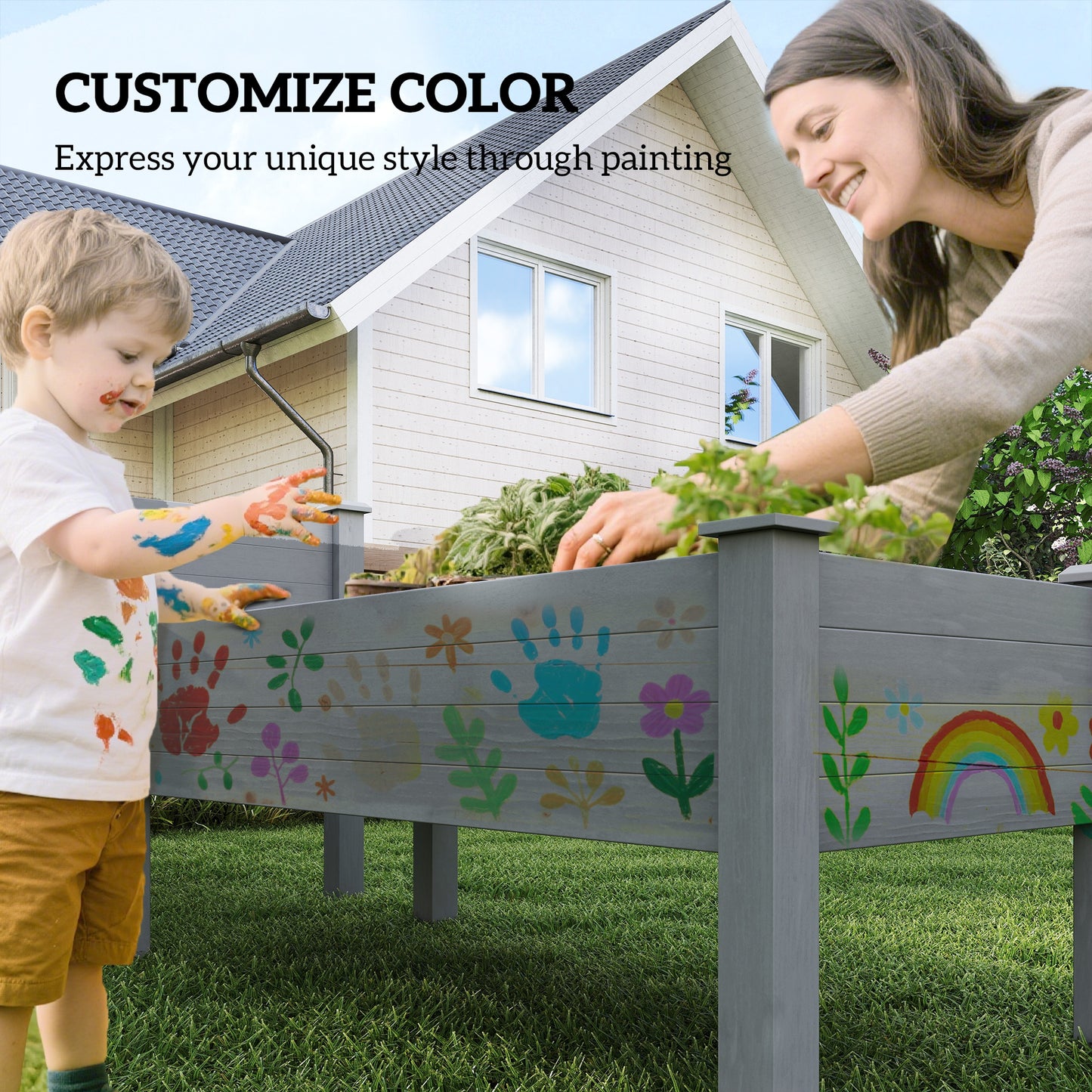
- Color in Gray; assembly required for setup.
- Note: due to wood grain, the final color may vary slightly from the pictured finish.
Performance / Benefits
For homeschool environments, this elevated bed turns gardening into an integrated learning experience. The height-freezes common back strain during care and observation, so students can stay engaged longer as they monitor plant growth and changes over time.
Practical learning opportunities include:
- Science & Biology — observe life cycles, plant anatomy, photosynthesis, and how roots respond to soil conditions.
- Math & Data — measure soil depth, plant spacing, and growth rates; record weekly data to build graphs and charts.
- Environmental Studies — study pollinators, soil health, and sustainable gardening practices like composting and water management.
- Curriculum alignment — pairs with biology, botany, environmental science, and math units; supports hands-on experiments and nature journals.
- Project ideas — start a herb garden for cooking lessons, grow a pollinator-friendly flower bed, or compare growth of same-species plants under different sunlight scenarios.
Use cases include setting this planter up in a sunny corner of your yard, on a classroom balcony, or indoors near a bright window for year-round learning. It’s ideal for families who want a tangible way to teach responsibility, observation, and scientific inquiry while cultivating edible or ornamental plants.
Tips for optimal homeschooling use:
- Pair plantings with a science notebook to document growth stages, leaf color changes, and irrigation needs.
- Rotate sun exposure options by reorienting the planter or moving it between spots to discuss light, heat, and plant preferences.
- Plan a cross-curricular unit: biology with a math module on measurement, or geography with seed origins and climate suitability.