Heritage Homeschool Supply’s
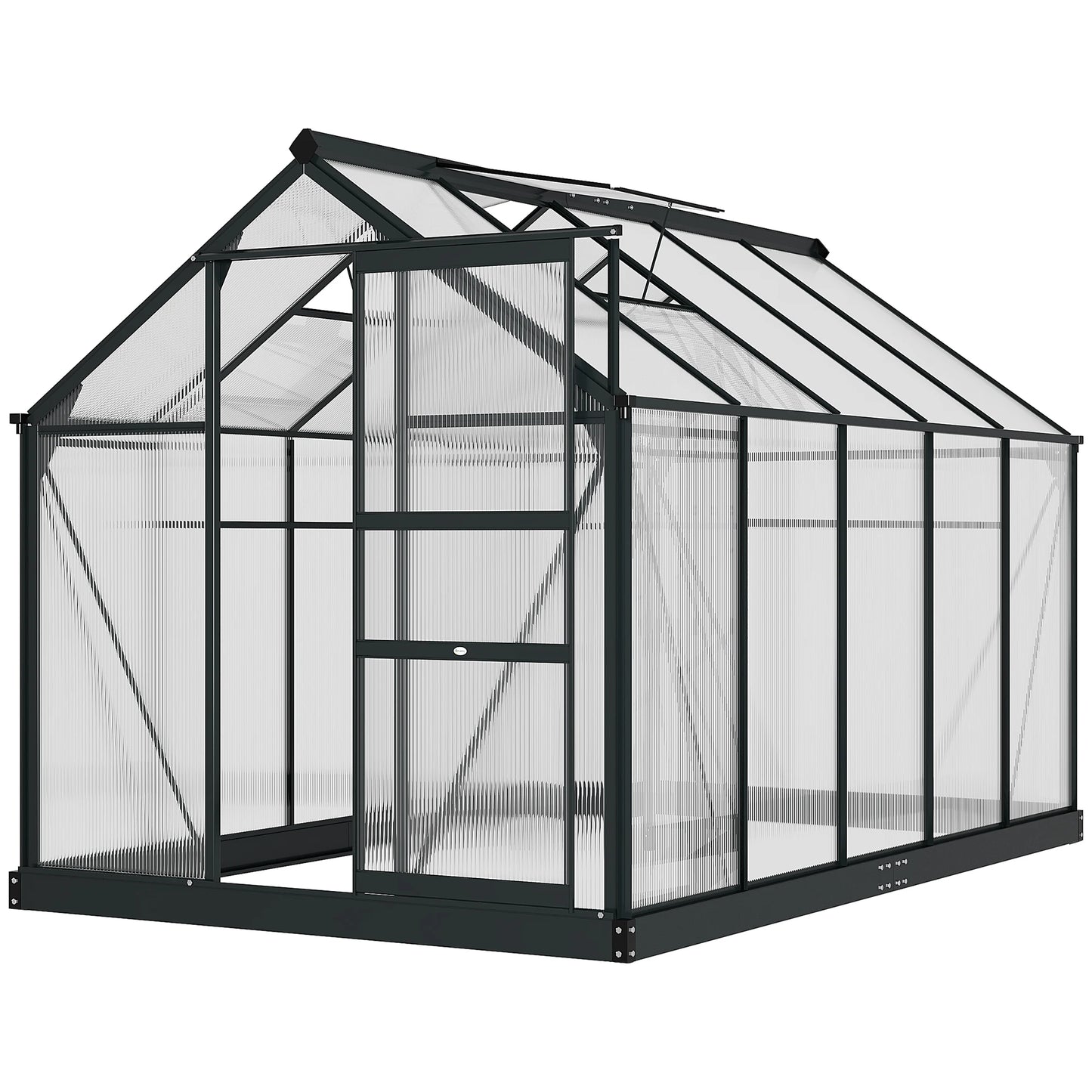
10' X 6' X 7' Aluminum Polycarbonate Walk-In Garden Greenhouse
10' X 6' X 7' Aluminum Polycarbonate Walk-In Garden Greenhouse
Couldn't load pickup availability
Designed for homeschool families and their kids, this Outsunny 10' x 6' x 7' Aluminum Polycarbonate Walk-In Garden Greenhouse turns your outdoor space into a hands-on classroom for science, botany, and discovery—where learning grows alongside plants.
Key Features & Design
- Spacious, walk-in layout with easy access on all sides, providing plenty of workspace for seed starting, potting, and student-led experiments.
- Aluminum gray frame combines durability with lightweight handling, resisting corrosion while staying easy to move if you rearrange your learning space.
- 4 mm polycarbonate panels offer clear light diffusion, helping protect tender seedlings while letting in ample sunshine for healthy growth.
- Weatherproof construction keeps moisture out and interiors dry, supporting year-round learning activities in a controlled environment.
- Roof vent measures 23.75" L x 23.5" W to regulate airflow, temperature, and humidity during lessons on plant physiology and climate.
- Door opening 23.5" L x 63.5" H provides easy, wide-entry access for kids carrying soil, pots, or science projects in and out.
- Clear footprint about 74.75" W x 122.75" D x 79.25" H with a 63 ft² covered area, giving students a defined, immersive growing space.
- Wind resistance rated up to 12 m/s and a weight capacity of 8.19 lb/ft² to support robust gardening activities and experimental setups.
- Non-toxic materials and a practical design emphasize safety and focus on learning rather than maintenance.
- Easily assembled with included hardware, so you can start your garden classroom without long delays.
- Placement tip—for best stability, position it against a wall and out of direct wind exposure.
Performance / Benefits
For homeschooling, this greenhouse becomes a dynamic extension of the classroom, turning theory into tangible projects. Students observe plant life cycles from germination to harvest, collect data on growth rates, and explore environmental science concepts in a real-world setting.
Learning opportunities and curriculum tie-ins include:
- Science & Botany—study photosynthesis, root systems, and plant anatomy by growing herbs, vegetables, or flowering plants. Track germination days, height progress, and leaf development over time.
- Environmental Science—experiment with microclimates, humidity control, and seasonal transitions inside a protected space, then relate observations to wider ecological concepts.
- Math & Data Analysis—measure area, volume (in growing beds or containers), track weekly growth, and graph results to interpret trends and outcomes.
- Geography & Planning— map sun exposure, plan crop layouts, and consider crop rotation to maximize yields and biodiversity in a small classroom garden.
- Writing & Reflection— maintain a garden journal with observations, hypotheses, and conclusions, linking science notes to student-written reports or presentations.
Practical use cases bring theory to life: start seeds in early spring for a head start on the season, harden off seedlings before transplanting outdoors, and run short science fairs focused on plant growth under varying conditions. The greenhouse’s design supports hands-on projects, collaborative learning, and independent study, all within a controlled environment that mirrors real-world horticulture.
Why This Matters for Your Homeschool
Beyond growing plants, this walk-in greenhouse creates a structured, teachable space where curiosity thrives. The combination of a sturdy aluminum frame and durable polycarbonate panels means fewer interruptions due to weather, so lessons can continue rain or shine. The 63 ft² of growing area offers enough room for multiple student projects, group experiments, or a rotating curriculum that keeps gardening fun and educational year after year.
If you’re building a dedicated garden classroom at home, this greenhouse aligns with hands-on STEM learning goals, integrates seamlessly with science and math curricula, and provides a practical, engaging backdrop for family projects and science fairs.